

How does interior waterproof coating respond to temperature changes?
Sep 01, 2026
Leave a message
Yo, what's up everyone! I'm an interior waterproof coating supplier, and today I wanna chat about how interior waterproof coatings respond to temperature changes. It's a topic that's super important, especially when you're looking to protect your indoor spaces from water damage.
Let's start with the basics. Temperature changes can have a significant impact on how well an interior waterproof coating works. You see, different coatings are made from various materials, and each material reacts differently to temperature.
One of the most common types of interior waterproof coatings is the Acrylic Based Waterproofing Paint. Acrylic-based paints are known for their flexibility. When the temperature drops, most acrylic coatings can contract without cracking. This is because acrylic polymers have a certain degree of elasticity. So, even if it gets a bit chilly inside your building, the coating will stay intact and continue to do its job of keeping water out.
On the flip side, when the temperature rises, acrylic coatings can expand. They can handle a reasonable amount of heat without losing their waterproofing properties. However, if it gets extremely hot, say above 100°F (38°C) for an extended period, the coating might start to soften. This softening can make it more vulnerable to scratches and abrasions. But in normal indoor temperature ranges, acrylic-based waterproofing paint is a reliable choice.
Another type of coating I often recommend is the Waterproof Coating for Concrete Water Tanks. These coatings are specifically designed for concrete structures. Concrete expands and contracts with temperature changes, and the waterproof coating needs to keep up.
In cold temperatures, concrete contracts. A good waterproof coating for concrete water tanks will also contract in sync with the concrete. This ensures that there are no gaps or cracks where water can seep through. When it's hot, the concrete expands, and the coating should expand as well. Some of these coatings are made with special additives that enhance their ability to adapt to temperature-induced movements.
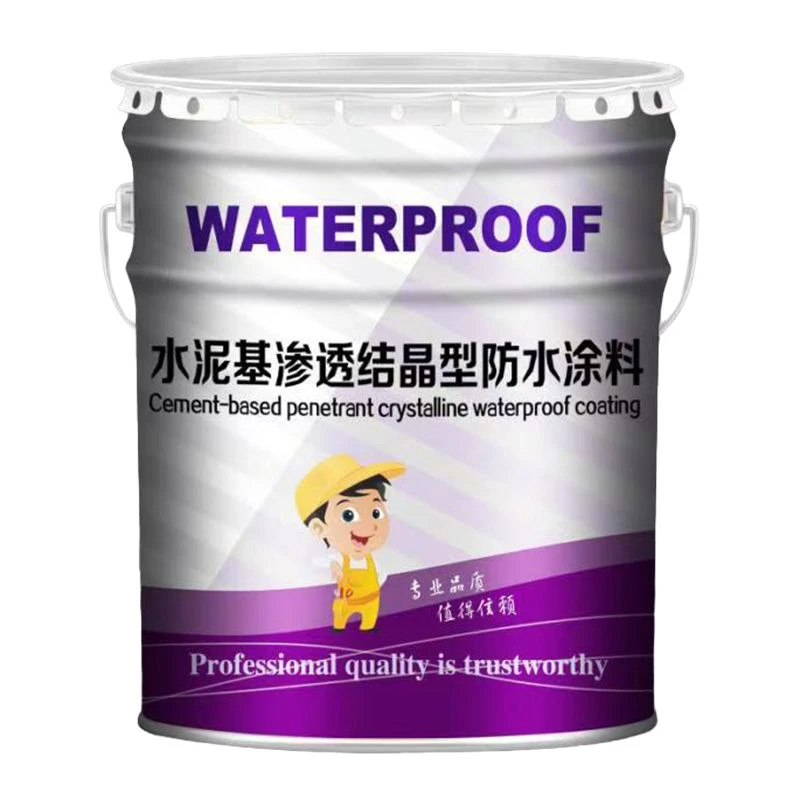
Now, let's talk about Cementitious Crystalline Waterproof Coating. This type of coating works in a unique way. It reacts with the moisture in the concrete to form crystals that block the pores and capillaries in the concrete. Temperature changes can affect the rate at which these crystals form.
In colder temperatures, the chemical reaction that forms the crystals slows down. This means that it might take longer for the coating to reach its full waterproofing potential. But once the crystals are formed, they are quite stable and can withstand a wide range of temperatures. In hot weather, the reaction might speed up, but as long as the coating is applied correctly, it will still provide excellent waterproofing.
For roofs, Waterproofing Cement Paint for Roof is a popular choice. Roofs are exposed to more extreme temperature variations compared to interior walls. During the day, the sun can heat up the roof to very high temperatures, and at night, it can cool down rapidly.
Waterproofing cement paint has good thermal stability. It can handle the expansion and contraction caused by these temperature changes. However, it's important to note that if the paint is not applied properly or if the roof has underlying issues, the temperature changes can cause the paint to crack or peel. So, proper installation and maintenance are key.
When it comes to interior walls, Interior Waterproof Paint for Walls is essential. Interior walls are generally not exposed to the same extreme temperature changes as roofs, but they still need to be protected from moisture.
Most interior waterproof paints are formulated to work well within the normal indoor temperature range. They can handle the slight temperature fluctuations that occur due to heating and cooling systems. These paints are also designed to be aesthetically pleasing, so you don't have to sacrifice the look of your walls for waterproofing.
So, how can you ensure that your interior waterproof coating performs well in different temperatures? First of all, choose the right coating for the specific application. If you're dealing with a concrete water tank, go for a coating that's designed for that purpose. If it's a roof, pick a waterproofing cement paint that can handle the heat and cold.
Secondly, follow the manufacturer's instructions for application. This includes things like surface preparation, temperature requirements during application, and drying times. Applying the coating in the wrong temperature can lead to poor adhesion and reduced performance.
Finally, regular maintenance is crucial. Inspect the coating periodically for any signs of damage or wear. If you notice any cracks or peeling, repair them as soon as possible to prevent water from getting in.
If you're in the market for interior waterproof coatings, I'd love to have a chat with you. Whether you're a homeowner looking to protect your walls or a contractor working on a big project, I can help you find the right coating for your needs. Just reach out, and we can start discussing your options.
In conclusion, understanding how interior waterproof coatings respond to temperature changes is vital for ensuring their long-term effectiveness. By choosing the right coating, applying it correctly, and maintaining it properly, you can keep your indoor spaces dry and protected.
References
- Building Waterproofing Handbook, various authors
- Journal of Coatings Technology and Research, multiple issues
- Manufacturer's product literature for interior waterproof coatings